Mapping Secure Banking Options to Strategic Approaches in Multi-Variant Live Dealer Environments
Written by Anna Neumann · Oct 2, 2026

Mapping Secure Banking Options to Strategic Approaches in Multi-Variant Live Dealer Environments
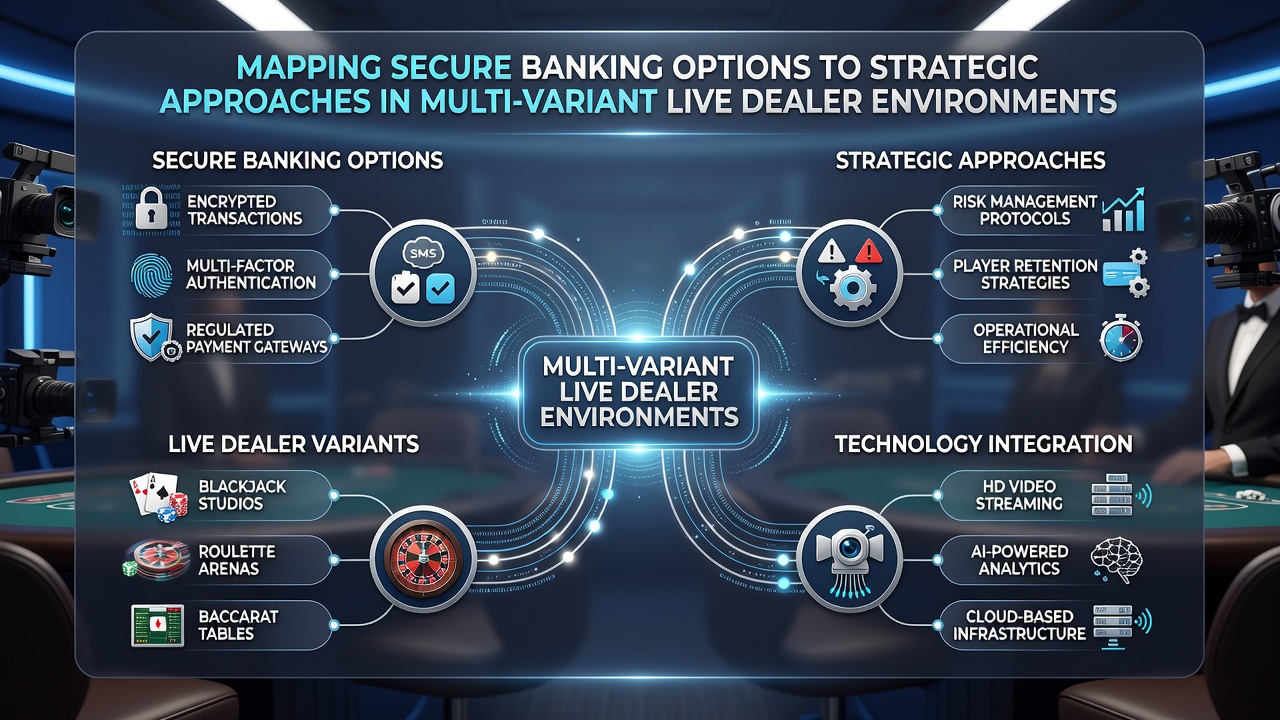
Secure banking options in multi-variant live dealer environments connect payment methods directly to operational strategies that operators use across different game formats and player interaction models, and data from regulatory bodies shows these connections influence transaction speed, compliance requirements, and platform stability in measurable ways.
Core Components of Secure Banking in Live Dealer Settings
Multi-variant live dealer environments combine multiple game types such as blackjack, baccarat, and poker variants on single platforms where real-time video streams and dealer interactions occur simultaneously, and banking systems must support instant deposits alongside scheduled withdrawals while maintaining encryption standards that meet international financial reporting thresholds. Payment processors typically route transactions through layered security protocols including tokenization and multi-factor authentication, and these protocols align with strategic decisions operators make about session length, bet range adjustments, and regional player access controls.
Bank transfers, e-wallet services, prepaid cards, and digital asset channels each carry distinct processing times and verification layers, and operators map these features to specific live dealer tactics such as high-volume low-stakes tables versus premium private rooms where larger transfers occur less frequently. According to figures released by the Financial Transactions and Reports Analysis Centre of Canada, transaction monitoring in licensed iGaming environments has increased by measurable percentages in recent reporting periods, which reflects tighter alignment between banking infrastructure and game-variant management.
Strategic Alignment Between Payment Methods and Game Variants
Operators examine how each banking channel supports or limits player engagement patterns across variants, and they adjust promotional structures or table minimums accordingly because faster e-wallet options often pair with rapid-turnover games while slower bank wire methods suit longer session formats. Research from industry monitoring groups indicates that platforms using integrated API connections between payment gateways and live dealer software reduce latency during simultaneous multi-table play, and this technical linkage allows for real-time balance updates that keep game flow uninterrupted.
Security certifications such as PCI DSS compliance and SSL encryption standards serve as baseline requirements, yet additional measures like biometric verification appear more frequently in environments handling multiple currency types and cross-border transfers. Those who track these developments note that the choice of banking option also affects how operators allocate server resources during peak hours when several variants run in parallel, and this allocation influences both operational costs and regulatory reporting accuracy.
Regional Regulatory Influences on Banking and Strategy Mapping
Jurisdictions apply different rules to payment processing in live dealer operations, and these rules shape which banking options receive priority in strategic planning. In October 2026 several licensing authorities introduced updated guidelines on digital asset transfers that require enhanced due diligence steps before funds reach live dealer accounts, and operators responded by recalibrating their variant offerings to maintain compliance without disrupting session continuity. Data released by AUSTRAC shows corresponding increases in audit frequency for cross-border transactions tied to interactive gaming platforms, which has prompted some operators to favor domestic banking rails for certain high-activity variants.
These regulatory shifts also affect how platforms structure loyalty programs and reward tiers because banking method availability can determine eligibility for instant bonus releases or cashback calculations. Observers note that environments supporting multiple live dealer variants often maintain separate banking dashboards so that compliance teams can isolate transaction streams by game type and jurisdiction, and this separation supports more precise risk assessments during routine reviews.
Technical Integration and Risk Management Practices
Live dealer platforms rely on middleware that synchronizes banking ledgers with game servers in real time, and this synchronization allows operators to apply variant-specific risk controls such as temporary deposit caps during high-volatility sessions. Encryption protocols and fraud detection algorithms operate continuously across all channels, and they generate alerts that feed directly into strategic decisions about which variants receive additional monitoring resources. Industry reports highlight that platforms with unified banking and game-management interfaces experience fewer reconciliation discrepancies at the end of reporting cycles.
Payment method diversification also supports contingency planning when one channel encounters temporary restrictions, and operators maintain backup processors that activate without interrupting live streams or dealer rotations. Those responsible for system architecture emphasize that mapping exercises occur regularly to ensure new banking options integrate smoothly with existing variant libraries and that performance benchmarks remain consistent across regions.
Conclusion
The mapping of secure banking options to strategic approaches in multi-variant live dealer environments continues to evolve as regulatory frameworks and technical standards advance, and the connections between payment infrastructure and game operations remain central to platform functionality across jurisdictions. Continued monitoring by financial intelligence units and licensing bodies supplies the data that informs these alignments, and operators rely on that information to sustain compliant and stable live dealer offerings.